
Choose one next move
Do not try to implement the whole article at once. Choose one message, one offer, or one launch moment.
Recover abandoned carts and collect signups starting at $0.
Recover abandoned carts and collect signups starting at $0.
Knowledge
Discover words that truly drive sales.
How to use this
Do not try to implement the whole article at once. Choose one message, one offer, or one launch moment.
Translate the takeaway into the first campaign you can validate quickly on your own traffic.
Add more variants, channels, and integrations only after the first campaign already shows business value.
Article
In a popup, the winner is not the one who shouts “Buy now”, but the one who most accurately names the customer’s need.
Let’s be honest: how many times have you irritably closed a window that suddenly popped up in the middle of your screen? And how many times have you actually clicked on it and left your email? The difference between these two reactions rarely lies in the design. A sales popup can be an intruder to the user or an invaluable opportunity - it all depends on the words used in it.
Customers don’t click buttons just because they have a nice, contrasting color. They click on the promise of a benefit. Effective sales copywriting is based on the understanding that behind every mouse movement lies a specific psychology of decision-making. From our experience in marketing automation at DropUI, it is clear: an effective popup is not outstanding graphics or complex animation, but precise microcopy that triggers action.
Just a few well-chosen words are enough to drastically increase database subscriptions, raise the click-through rate, and genuinely drive sales. Once you replace dry messages with the language of benefits, you will realize that effective sales is simply accurate communication. In this article, we will show you how to use the language of persuasion and implement words that sell, so that your pop-ups stop irritating and start earning.
In both e-commerce and broader B2B/B2C marketing, a properly structured message is the foundation. The use of techniques such as sales copywriting is not aimed at manipulation, but at making it easier for the customer to make a decision that is beneficial to them. At the heart of this process lie Power Words and a properly balanced language of persuasion. Why do these persuasive words have such a huge impact on conversion?
Definition of Power Words
Power Words are explosives in the world of copywriting. They are words that trigger strong emotions, stimulate natural curiosity, or instantly build a sense of value. They operate on a subconscious level, bypassing the analytical part of the brain that wonders “do I even need this?”. It is a specific language that drastically shortens the path from the first glance to the final click. They don’t tell the user to think, they tell them to feel and act.
A popup is a place for a 2-second decision
The internet environment is brutal for texts. The user does not read your website, they scan it looking for patterns of interest. When a popup appears on the screen, you literally have 1 to 2 seconds to defend yourself against a click on the “X”.
In such an extremely short time:
Absolute simplicity of the message counts.
The pace of absorbing information is crucial.
The first, instant association evoked by the headline is decisive.
That is why there is no room for long, complex sentences in popups. There is only room for dynamics and accuracy.
Emotions, FOMO, and the promise of benefits
To win the customer’s attention within these two seconds, your text must be based on strong stimuli. Emotions, the FOMO syndrome (Fear Of Missing Out), and a clear promise of benefits work best here.
Instead of asking, start offering using trigger words:
“Gain” - awakens a sense of immediate enrichment (not necessarily financial).
“Discover” - stimulates curiosity and promises new knowledge or a solution.
“Only today” - a classic FOMO trigger that creates a timeframe and forces a quick decision.
“Check” - a non-binding, safe call to action.
“Free” - a magic word that lowers the transaction risk to zero.
Why neutral language doesn’t sell
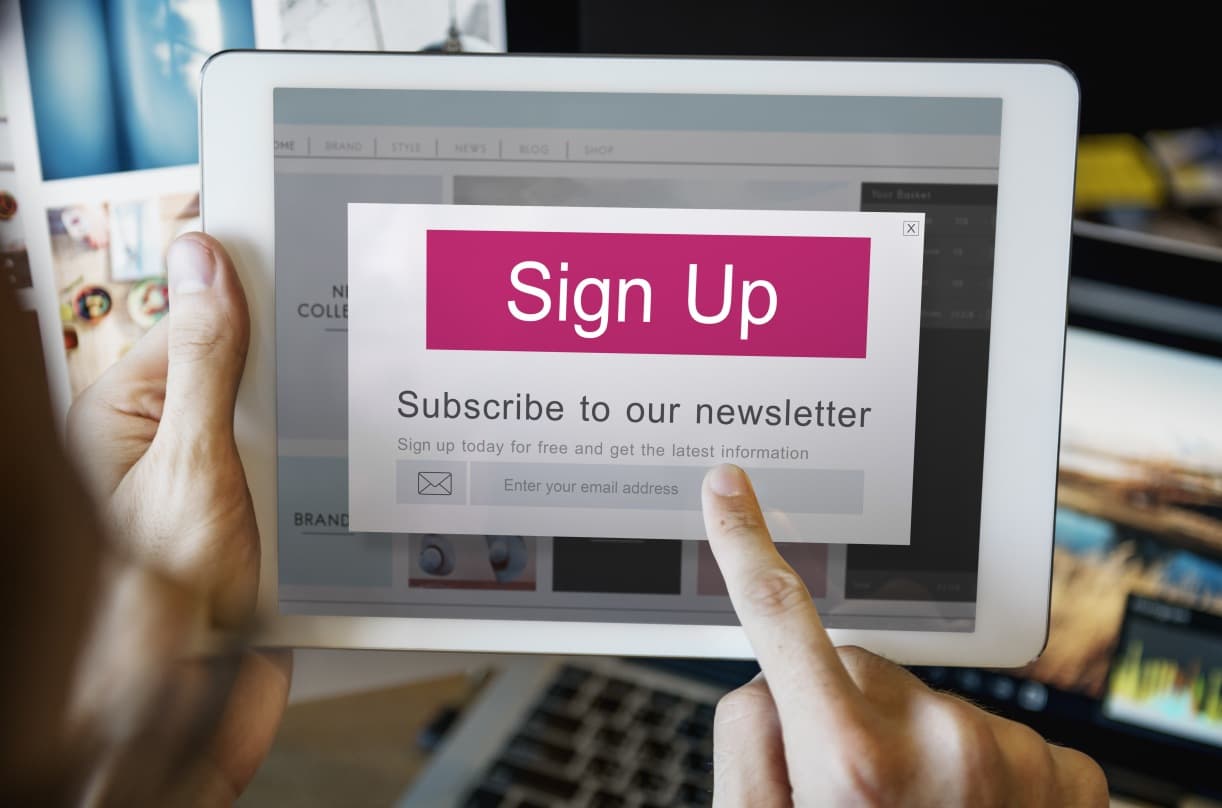
The consumer’s brain is programmed to ignore boredom. If you use the phrase “Subscribe to the newsletter” on your popup, you give the user a task to complete (subscribe), offering in return something incomprehensible and often associated with spam (newsletter). This is classic neutral language, devoid of life, emotions, and any value for the customer.
Contrast this with the message: “Claim your discount and inspiration”. Everything changes here. Instead of an obligation (“subscribe”), you give a reward (“claim”). Instead of an impersonal email (“newsletter”), you offer concrete material value (“discount”) and substantive/aesthetic value (“inspiration”). Neutral language informs. Language based on Power Words - sells.
You create a beautiful sales popup, set the display rules, launch the campaign and… nothing. The conversion rate is flatlining, and you are wondering how to increase conversion, since from a technical point of view everything works flawlessly. From the perspective of software like DropUI, we see thousands of campaigns. The conclusion is always the same: it is not the tool that fails, but a poorly formulated message. Effective sales most often die through four basic errors in the texts.
Too much text, too few benefits
A popup is not the place for essays about your company’s history or detailed promotion regulations. When a user sees a wall of text, their brain automatically registers it as cognitive effort, and immediately clicks “close”. An effective message must answer one fundamental question of the customer: “What’s in it for me?”. If you do not indicate a concrete benefit in the first fractions of seconds, every additional letter works to your disadvantage.
Talking about the store instead of the customer
This is the most common cardinal sin of e-commerce. Messages like “Subscribe to our newsletter to receive information about new products in our store” are extremely egocentric. The customer is not interested in your store, your novelties, or your business goals. The customer is interested in themselves and their own problems. Change the perspective from “we” to “you”. Stop talking about what you want to send, start talking about what the customer can gain.
Words without emotions and without purpose
Many popup creators fall into the trap of official language or language that is painfully correct, but completely drained of emotions. Words such as “we inform”, “subscription”, “notifications”, or “catalog” are mental tranquilizers. They do not build tension, do not stimulate curiosity, do not evoke a smile or a sense of urgency. A message devoid of an emotional charge is simply information, and information rarely sells spontaneously.
A CTA that promises nothing
The Call to Action (CTA) button is the climax. This is where the final decision is made. Unfortunately, most buttons on the internet resemble unpleasant duties. If your button says “Send” or “Subscribe”, you are subconsciously communicating to the customer: you must do some work.
See how drastically the tone changes when we replace compulsion with a promise and a reward. Here are example contrasts:
“Join the newsletter” → “Grab a discount code”
“Subscribe” → “I want a discount”
“Sign up” → “I’m claiming a gift”
In the first column, you give a task. In the second, you hand over a reward. Which option would you rather click yourself?
For effective sales to become a reality, you must master sales copywriting based on specifics. The key is the language of benefits - a powerful tool that translates the dry parameters of your offer into real, tangible gains for the user.
The customer doesn’t want a newsletter - they want value
Let’s establish the facts: nobody wakes up in the morning with the desire to get more advertising emails. Signing up for a newsletter is solely a means to an end for the customer, not an end in itself. So what do they desire?
A discount that will allow them to keep more money in their wallet.
Savings of time or nerves.
Access to limited collections before others (this flatters the ego!).
Inspiration that will make their life easier or make them feel better.
A bonus that is a nice surprise added to their purchases.
Instead of promoting “subscribing to the database”, promote these values.
How to turn features into benefits
A feature is a fact about your offer. A benefit is the answer to how this fact will improve the customer’s life. In popups, you don’t have time to educate - you must hit the benefit immediately.
Here is how it looks in practice:
Feature: “10% off” → Benefit: “Pay less already on your first order” (you give a sense of immediate savings).
Feature: “Free delivery” → Benefit: “Don’t overpay for your purchases” (you protect the customer from the frustration of hidden costs in the cart).
How to write to emotions, not to functions
We make 90% of purchasing decisions emotionally, and only then do we rationalize them with logic (e.g., explaining to ourselves: I bought these shoes because the old ones are already getting ruined). A good popup hits exactly these emotional strings. Instead of listing functionalities, build messages around what the user will feel.
Appeal to:
Convenience (“Order today, and we will take care of the rest”).
Peace of mind (“Buying from us? Your return is always stress-free”).
Sense of a bargain (“Such a price won’t happen for another year”).
Exclusivity (“Enter the closed VIP circle and buy premieres before everyone else”).
The strongest promises in popups
If we were to squeeze the essence out of thousands of email and popup campaigns that we optimize at DropUI, it would turn out that consumer desires boil down to five powerful pillars. Your promise in the window must guarantee that thanks to you, the customer will get something:
Faster (instant code via email, shipping in 24h).
Cheaper (welcome discount, free delivery).
Easier (ready-made sets, no hidden catches).
Earlier (early access to sales).
Risk-free (free return, satisfaction guarantee).
If your popup promises at least one of these five things in a clear, understandable way - the conversion will shoot up.
Effective sales copywriting is not magic, it is pure behavioral psychology. When you design a campaign, you need to know what stimuli the human brain subconsciously reacts to. The professional language of persuasion is based on triggers that immediately categorize the offer in the customer’s head.
Below I present the absolute essence: the words that sell best, divided into five psychological categories. Treat this section as a ready-made cheat sheet for optimizing your campaigns.
Words building value and profit No one likes spending money, but everyone loves buying and gaining. Your task is to shift the user’s attention from the cost to the reward. Words from this group scream to the subconscious: “This pays off for you!”.
Gain (shifts the center of gravity from “buying” to “receiving”)
Claim (suggests that the reward is already waiting and is the customer’s property)
Bonus (unexpected added value)
Gift (works stronger than “discount” because it is associated with something free and nice)
Freebie (a classic that never loses its power)
Save (appeals to the rationalization of the purchase)
Discount (a concrete, measurable financial benefit)
Words triggering urgency The golden rule of e-commerce is: a customer who postpones a decision for later usually does not return. You must trigger a controlled FOMO effect (fear of missing out), giving a clear signal that the window of opportunity will close soon.
Now (forces immediate action)
Today (sets a clear time limit)
Only today (the strongest trigger for daily promotions)
Last chance (hits the reluctance to lose an opportunity)
Ending (suggests decreasing availability)
Don’t miss out (a direct appeal to the FOMO syndrome)
Words building curiosity The human brain cannot stand the so-called information gap (incomplete information). If you suggest in a popup that there is something intriguing on the other side, the user will click the button just to satisfy their natural curiosity.
Discover (a promise of new knowledge or a solution)
See (encourages visual verification)
Check (a light, non-binding call to action)
Explore / Get to know (suggests taking possession of some secret)
Secret (one of the strongest attention-grabbing words)
Hit (social proof in one word - “since it’s a hit, I have to see it”)
Words building security Before the customer enters their email or clicks “buy”, a red light turns on in their head: Is it safe? Isn’t it spam? Won’t it be difficult?. Words from this group act like a protective shield - they take the risk off the customer’s shoulders and lower the entry barrier.
For free (completely eliminates financial risk)
Risk-free (builds trust in the brand)
Easily (a promise of no frustration)
Simply (a guarantee of a quick process)
Conveniently (an appeal to natural consumer laziness)
Words reinforcing exclusivity Everyone likes to feel appreciated and special. Appealing to status is an extremely powerful mechanism, especially in premium brands, loyalty programs, and when launching new collections.
Only for you (personalization at the highest level)
Limited (a connector of exclusivity with unavailability)
Earlier (a promise of an advantage over other customers)
VIP (a magic word building high status)
Pre-release access (works wonderfully in the fashion, beauty, or tech industry)
A good sales headline is the absolute foundation. When a window appears on the screen, it is the largest text that determines whether the user will pause their gaze or instinctively look for the closing cross. Professional popup copywriting is based on one rule: you have a fraction of a second to prove that you are worth reading. If the headline fails, effective sales simply will not happen, because no one will read the rest of the message.
The headline is meant to stop, not explain
The biggest mistake of beginner marketers is trying to fit the entire offer into one sentence. The headline in a popup is not for explaining the promotion rules, providing delivery terms, or describing the brand’s history. Its sole purpose is to capture attention through the promise of a powerful benefit. It is supposed to act like a mental brake while scrolling. Leave the explanations and details for the smaller text below (subheadline).
The best headline formulas
From our experience in campaign optimization, it turns out that simple, dynamic, and reward-oriented headlines convert best. Here are proven formulas that you can implement right away:
“Grab -10% to start” - ideal for welcoming a new user. It states directly what is up for grabs and when (now, to start).
“Don’t leave without a discount” - a classic pattern for exit-intent popups (when the user wants to close the page). It uses loss aversion.
“Claim a gift with your order” - the word “gift” works magically and immediately builds positive associations with the brand.
“Only today: free delivery” - a powerful FOMO strike combined with eliminating the biggest purchasing barrier in e-commerce.
Mistakes in popup headlines
Why are so many windows closed immediately? Because their headlines commit four basic sins:
Too general: “Subscribe to the newsletter” (no reason why it is worth doing).
Too formal: “Information about new products in the assortment” (sounds like an official letter, not an invitation to a cool store).
Devoid of emotions: “Contact form” (lulls vigilance and does not arouse any desire).
Lacking specifics: “We have cool promotions” (the consumer does not believe empty promises - they prefer to see a specific number or percentage).
You captured the customer’s attention with the headline, aroused desire with a benefit, and now comes the moment of truth: the call to action. A well-designed sales CTA (Call to Action) is the dot over the “i” in your campaign. Even the best text ignored by a weak sales button will not bring results. This is where sales copywriting becomes the most precise.
“Send” and “Subscribe” are not enough
As I mentioned earlier, words like “Send”, “Sign up”, or “Subscribe” mean work and commitment to the brain. They are associated with filling out surveys or signing contracts, not with joyfully claiming rewards. Leave these words for administration, and in marketing, bet on the reward.
The CTA should speak the customer’s language
The best-converting buttons are those that finish the sentence starting in the customer’s head with the words: “I want…”. When the user reads the CTA, they should feel that they are making the decision to claim the benefit themselves, not that the system is forcing them to execute a command.
Try these alternatives:
Instead of “Sign up” → “I want a discount”
Instead of “Claim” → “I’m claiming the code” (using the first-person singular is a powerful psychological trick).
Instead of “Confirm” → “Yes, I want to save”
Instead of “Go to store” → “Show the offer”
Microcopy on the button matters
Microcopy are those small, often unnoticeable at first glance words that accompany the main navigation elements. In the context of a CTA, it is the text on the button itself, but also the short text right below it (e.g., “You can unsubscribe at any time” or “Code valid for 24h”). Good microcopy on and around the button eliminates the customer’s final objections before clicking. It shows them that the action is safe, fast, and 100% profitable.
How to test CTA for conversion
In marketing automation (such as that carried out in DropUI), there is no room for guessing. Always rely on data. Testing CTAs is one of the fastest ways to increase the conversion rate.
How to do it right?
Change only one thing at a time. Run an A/B test where version A has the button “I’m claiming the discount” and version B “I want a discount”. The rest of the popup (colors, headline, image) must remain identical.
Monitor CTR (Click-Through Rate). Check which button users are more willing to click.
Analyze the final sales. Sometimes a button that generates more clicks does not at all lead to a larger number of closed carts. Measure the full conversion path.
Copying a ready-made message is a great start, but the real art of optimization lies in the context. A perfect sales popup must resonate with the recipient at a specific moment. The language of benefits in e-commerce is not universal; it requires flexibility. For effective sales to drive your results, you need to know who you are talking to, in what industry, and at what stage of the funnel.
Fashion sells differently, beauty sells differently, home and garden sell differently
Each industry has its unique psychological triggers:
Fashion: Here emotions, speed, trends, and exclusivity rule. Key words are: look phenomenal, be the first, hot trend, limited collection. The user is buying a better version of themselves.
Beauty (Cosmetics): Customers are looking for trust, safety, social proof, and self-care. Messages should be based on promises: take care of yourself, discover the secret of a radiant complexion, free sample, test without risk.
Home & Garden: This is an industry of more carefully considered decisions, where carts are more expensive. Convenience, durability, and absolute savings count. Instead of “-10%”, it is better to write “Save 300 PLN on a new sofa”. Slogans work: build your dream space, free bulky delivery, guarantee for years.
New customer vs returning customer
Showing the same popup to all visitors is wasting potential. Marketing automation teaches us segmentation:
New customer: Is distrustful. You must lower their entry barrier. Offer a strong welcome discount (“15% to start”), highlight free delivery, and build trust with others’ reviews.
Returning customer: Knows you. Looking for conversion from them through a “discount on first purchases” is a technical and image error. Hit loyalty and appreciation: “Welcome back! We have early access to the sale for you” or “Grab double points in the loyalty program”.
Popup on the homepage vs popup in the cart
The location of the window on the page defines its purpose and vocabulary:
Homepage (Top of the Funnel): The customer is just looking around. Here the goal is to collect a lead and encourage browsing the offer. Headlines can be more general, inviting into the brand’s world and promising a general discount.
Cart (Bottom of the Funnel): The user is one step away from purchasing. This is not the place to invite to the newsletter! A popup in the cart should appear mainly as a rescue (exit-intent) when the customer wants to leave. The message must overcome objections: cut shipping costs, offer a marginal discount that applies immediately, or guarantee hassle-free returns.
When a discount works, and when a bonus works better
This is the eternal e-commerce dilemma. The answer lies in your brand’s positioning:
Discount (% or amount reduction): Works perfectly in stores with low or medium value products, during mass sales, and in industries with very high price competition. It attracts price-sensitive customers (so-called smart shoppers).
Bonus (gift with order, freebie, premium service): This is an ideal solution for Premium, Luxury brands, and niche original businesses. Lowering the price in this segment spoils the brand perception (if they dropped the price by 30%, then the goods are probably not that elite). Instead of cutting your margin, apply a value-adding strategy: “Buy a day cream, and you will receive a luxury eye serum as a gift”.
The line between encouraging a customer to buy and making them feel deceived is very thin. In e-commerce, trust is built over years, and it can be lost with one poorly designed window. The right language of persuasion is a powerful tool, but used irresponsibly, it can bring the opposite effect to the intended one. How to use sales copywriting so that the customer feels motivated, and not hounded?
Persuasion works, but manipulation harms
Persuasion consists in showing the customer real benefits and making it easier for them to make a decision that actually solves their problem (e.g., allows them to save money). Manipulation, on the other hand, is forcing the user into action by misleading them, hiding costs, or inducing false fear. At DropUI, we know that effective sales are those in which the customer feels satisfaction after closing the transaction, not remorse. Use Power Words to tempt with value, not to deceive.
Too aggressive language lowers trust
“BUY NOW OR LOSE EVERYTHING!” - sounds familiar? Too many exclamation marks, overusing capital letters, and tossing around words like “shock” or “absolute hit”, make your popup start to resemble a cheap 90s commercial. The modern consumer is extremely sensitive to clickbait and aggressive sales. Such language, instead of building FOMO, triggers a defense mechanism (so-called reactance) in the customer and drastically lowers trust in the brand.
How to write for sales, but credibly
Credibility is based on truth and specifics. If you promise a discount “only today”, the code really must stop working at midnight. If you write “last pieces left”, the inventory must reflect this. To sound convincing:
Use precise data (e.g., “Save 45 PLN” instead of “Huge savings”).
Avoid exaggerations you cannot prove.
Use clear and transparent language of benefits - state directly what needs to be done to claim the reward.
The most common mistakes in “strong” messages
The biggest image mistake in popups are the so-called dark patterns. The worst of them is the phenomenon of guilt-tripping, i.e., inducing a feeling of guilt in the window closing button. Examples? A close button that says: “No, thanks, I prefer to pay full price and lose money” or “No, I don’t care about my health”. This is not smart marketing - it is a straight road to irritating the user and forcing them to leave the store forever.
Even the best copywriter cannot predict with 100% certainty how your unique target audience will react to a given message. In e-commerce, there is no room for guessing. The foundation of working with Marketing Automation systems is popup A/B testing, which allows business decisions to be based on hard data. Proper conversion optimization requires an analytical approach because sales copywriting often makes the biggest difference in the numbers.
What to test: headline, CTA, benefit, timing
To find out what really works on your customers, you should regularly test popup elements. The biggest impact on the result have:
Headline: Does the customer prefer to read “Claim a 10% discount” or “Save on your first purchases”?
CTA (Call to Action): What clicks better: “I want the code” or “I’m claiming the discount”?
Benefit: Does free delivery or a fixed amount discount (e.g., 50 PLN) convert better in your industry?
Timing (display time): Should the window pop up immediately upon entry, after 15 seconds, after scrolling 50% of the page, or only when attempting to leave (exit-intent)?
How to measure popup effectiveness
Just setting up the test is half the battle. You need to know what metrics to look at in your software’s dashboard. The most important indicators are:
CTR (Click-Through Rate): The percentage of people who clicked the button (e.g., “Claim code”) after seeing the popup. This is a direct measure of your CTA’s effectiveness.
Subscriptions (Conversion Rate for leads): How many users actually left their email address in exchange for the promise.
Sales: The ultimate verifier. How many users who saw the popup and downloaded the code used it in the cart and paid for the order?
Bounce Rate: Did launching an aggressive popup happen to cause more people to immediately flee your website without taking any action?
Don’t test everything at once
The golden rule of A/B testing: we change only one variable in one test. If you simultaneously change the headline, background color, button copy, and discount size in variant B, and this version wins, you will have no idea why it won. Isolate the elements. First, test two different headlines with an identical CTA. When you determine the winner, do another test - this time changing only the words on the button.
A small word change can yield big growth
We often think that to increase sales, we must offer a larger discount or implement a massive, expensive campaign. Meanwhile, in conversion optimization, details make a gigantic difference. Changing one word in a headline, removing an unnecessary adjective, or adding the word “Your” before the word “discount” can increase conversion by several dozen percent. That is exactly why continuous testing and polishing the language to perfection is so important.
Creating effective messages raises many questions, especially since algorithms and consumer behaviors are constantly changing. Below I have collected topics that will help you systematize your knowledge about how words influence purchasing decisions.
What words sell best? In the e-commerce world, the so-called Power Words work best. These are expressions that instantly trigger emotions, build a sense of value, or evoke the desired FOMO effect. The words that sell most effectively in e-commerce include: gain, claim, gift, only today, save, free, and check.
How to write a sales popup? A good sales popup must be as concise as possible and audience-oriented. Instead of describing your brand’s history, focus on a specific promise. Use a strong headline, provide a clear reason why it is worth leaving an email, and apply sales copywriting that shortens the path to a decision to just 2 seconds.
What is the language of benefits? The language of benefits is a communication technique consisting in translating dry facts and offer features into real gains for the customer. Instead of informing about “free delivery” (feature), using the language of benefits you will tell the consumer: “Don’t overpay for your purchases” (financial and emotional benefit).
How to increase popup effectiveness? To learn how to increase popup conversion, you must abandon universal templates in favor of personalization. Test different headlines and buttons (A/B tests), display messages at the right moment (e.g., exit-intent in the cart), and ensure that the window’s promise matches the user’s intent at a given stage of the funnel.
What CTA works best? The most effective CTAs for popups are those that speak in the first person and point to a reward, not an obligation. Give up neutral buttons like “Send” or “Subscribe”. Instead, use phrases such as: “I want a discount”, “I’m claiming the code”, or “Yes, I want to save”.
How to use the language of persuasion in e-commerce? Proper language of persuasion consists in showing the customer real value and making it easier for them to make a good decision. You should base it on truth and specifics (e.g., a truly time-limited offer), avoiding aggressive manipulation, exaggerations, or inducing a feeling of guilt, which drastically lower trust in the brand.
If you remember only one thing from this article, let it be this rule: in a world overloaded with visual stimuli, it is the precise text that closes transactions. Even the most beautifully designed window in DropUI won’t save a campaign if it doesn’t carry a valuable promise for the user.
The most important takeaways worth implementing right away:
A popup only works when it speaks the customer’s language. Stop writing about what your store wants to convey. Write about what the customer wants to hear and gain.
Power Words are the foundation. Properly selected persuasive words immediately increase attention, generate clicks, and raise the conversion rate.
The language of benefits always wins against the language of features. Consumers do not buy your products’ features - they buy savings, convenience, status, and peace of mind.
Detail has gigantic significance. A good, personalized CTA (e.g., changing from “Send” to “I’m claiming a gift”) can completely change the financial outcome of the entire campaign.
In e-commerce, the winner is not the one who says more, but the one who speaks more accurately. Less text, more value.
If your popups are not increasing sales, the problem is often not the tool. The problem is the language. Check your campaigns and remove everything from them that does not bring a real benefit to the recipient. Apply the techniques mentioned above, launch A/B tests in DropUI, and see with your own eyes how changing just a few words in the headline gives a more powerful effect than an expensive advertising campaign. Start with the words that trigger the purchasing decision, and watch your profits grow.
FAQ
Power Words are emotionally charged terms that trigger curiosity, urgency, or perceived value within milliseconds. In popup marketing, they reduce cognitive effort and guide fast decisions. Words like “free,” “exclusive,” or “today” activate psychological shortcuts, making users more likely to click, subscribe, or complete a purchase without overanalyzing.
A popup typically has between one and two seconds to capture attention before being closed. During this short window, the headline must communicate a clear benefit instantly. Simplicity, readability, and emotional impact determine whether the user engages or dismisses the message entirely.
Neutral language lacks emotional triggers and perceived value, making it easy for the brain to ignore. Phrases like “subscribe to newsletter” feel like obligations rather than benefits. Users respond better to messages that promise something tangible, such as savings, convenience, or exclusive access.
Features describe what a product or offer includes, while benefits explain how it improves the user’s situation. For example, “10% discount” is a feature, but “save money on your first purchase” is a benefit. Popups should prioritize benefits to drive emotional engagement.
Highly effective Power Words include “free,” “now,” “limited,” “bonus,” “exclusive,” and “discover.” These words trigger urgency, curiosity, and value perception. When combined with a clear benefit, they significantly improve click-through rates and lead generation performance in online stores.
CTA wording directly impacts user motivation by framing the action as either effort or reward. Buttons like “Submit” feel like work, while “Get my discount” feels like receiving value. Effective CTAs use first-person language and emphasize the benefit users will gain instantly.
FOMO, or fear of missing out, creates urgency by suggesting that an opportunity is limited or temporary. Words like “only today” or “last chance” encourage immediate action. This reduces hesitation and increases conversion rates by preventing users from postponing decisions.
Common mistakes include too much text, focusing on the brand instead of the customer, lack of emotional language, and weak CTAs. These issues increase cognitive load and reduce clarity, making users more likely to close the popup instead of engaging with the offer.
New customers need trust-building incentives like discounts or free shipping to reduce entry barriers. Returning customers respond better to exclusivity, loyalty rewards, or early access. Tailoring messaging based on user behavior significantly improves engagement and overall conversion efficiency.
Discounts work best in competitive, price-sensitive markets, while bonuses are more effective for premium brands. Bonuses add perceived value without reducing price, preserving brand positioning. The choice depends on audience expectations, product category, and overall pricing strategy.
Trust is built through transparency, realistic promises, and clear conditions. Avoid exaggerated claims or misleading urgency. Use specific numbers, honest messaging, and reassurance like “unsubscribe anytime” to reduce perceived risk and create a positive user experience.
Key elements include headline, CTA wording, offered benefit, and timing of display. Testing one variable at a time allows accurate insights into what drives conversions. Even small changes, like adjusting a single word, can lead to measurable improvements in performance.
Shorter copy reduces cognitive load and allows users to quickly understand the value proposition. In fast-scrolling environments, concise messaging with strong emotional triggers ensures clarity and speed, which are essential for capturing attention and driving immediate action.
Businesses should analyze user behavior, funnel stage, and context. Early-stage visitors need discovery-focused language, while cart-stage users need reassurance or incentives. Matching language to intent increases relevance, improves user experience, and significantly boosts conversion rates.
Ready to launch
Create an account and test the first campaign on your own traffic. Less reading for later, more ideas you can validate in action right away.
Getting started takes a few minutes