
In your store
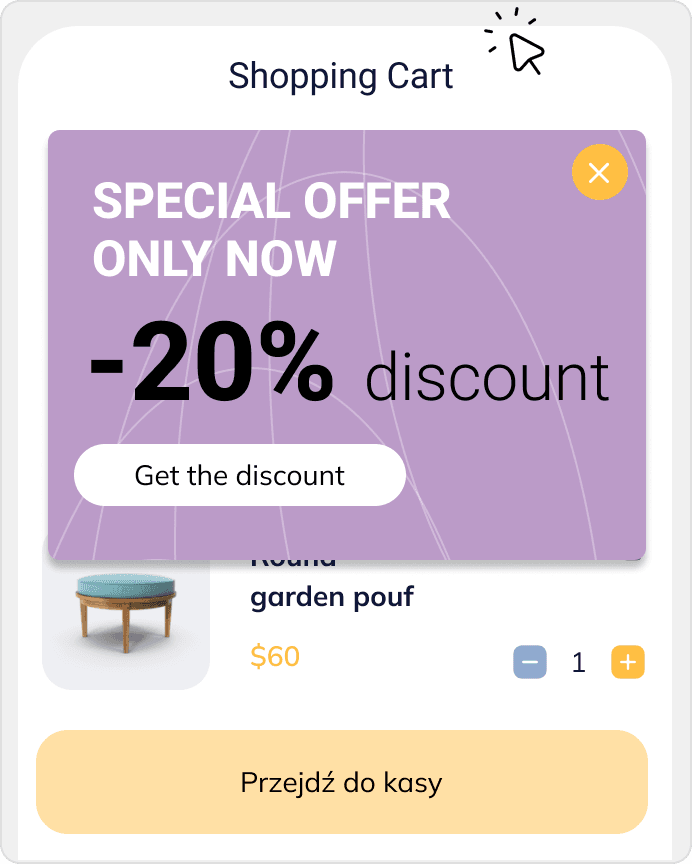
Popup: abandoned cart
Show a discount, free shipping, or one last offer when a shopper is about to leave with a cart.
Recover abandoned carts and collect signups starting at $0.
Recover abandoned carts and collect signups starting at $0.
In Sellfy, the most valuable moment is the product-page visit. The problem appears when the shopper evaluates the offer quickly and disappears just as fast without buying. DropUI helps hold attention on the product, turn it into a purchase or a signup, and give that visit more than one chance to convert.
See where to start and what will show fastest whether Sellfy helps you get more from your traffic.
In Sellfy, the most valuable moment is the product-page visit itself. The shopper sees the offer, evaluates it quickly, and often disappears just as fast. That is why popups, web push, and recovery scenarios matter when they help hold attention on the product and turn it into a purchase, a signup, or a return to cart.
DropUI uses ecommerce context such as cart value, products in the cart, currency, URL, device, and language. This lets the message appear at the hesitation point and remind the shopper about the product, the buying reason, or one simple next step instead of letting the visit disappear without a trace.
Usually it is the move from product page to decision. That is why the strongest scenarios reinforce the buying reason, remind about the cart, or help keep contact with someone who is not ready to buy yet.
If the shopper has a product in the cart but does not complete the purchase, one focused message can recover revenue that is about to disappear. The strongest options are usually a cart reminder, a simple bonus, or a clear buying argument.
If the shopper already left, web push helps you reach them again with a reminder about the cart, the product, or the offer. That gives the product-page visit one more chance to end in a sale.
Not every visit ends in a purchase. A newsletter form, first-purchase code, or promotion access can turn anonymous product-page traffic into a contact you can bring back later. If the shopper shares contact details or marketing permission, recovery does not have to end with the on-site popup. You can also come back through email, SMS, WhatsApp, or web push and give the store a second chance to close the sale.
The real question is whether more product-page visits turn into purchases, returns to cart, or signups. DropUI helps you see that first and only then decide which messages deserve to scale.
DropUI gives you access to more than 80 ready-to-launch scenarios. If you are starting with Sellfy, these three are the fastest way to see what actually lifts sales, leads, or cart value.
In your store
Show a discount, free shipping, or one last offer when a shopper is about to leave with a cart.
In your store
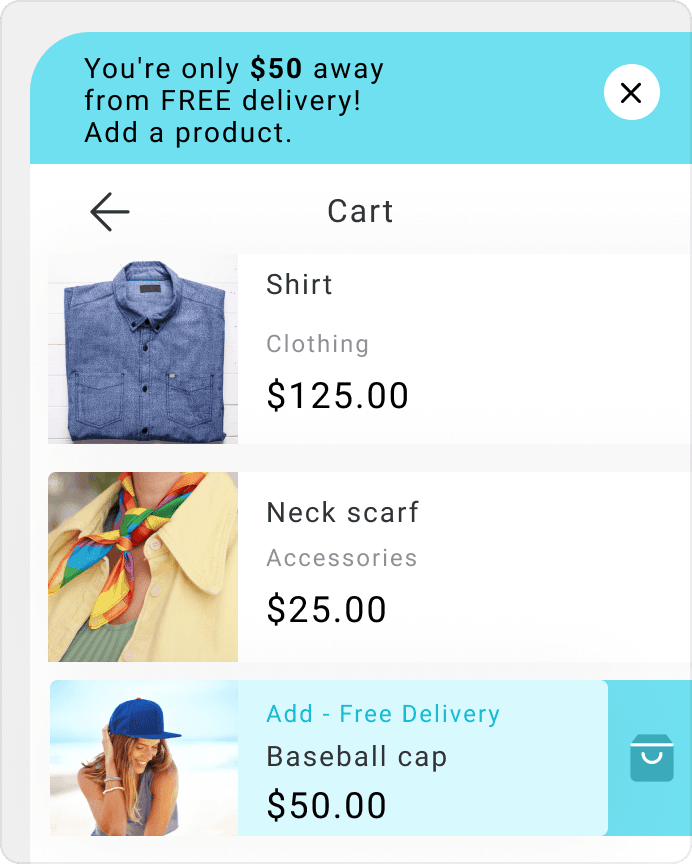
Show how much is left to free shipping and give shoppers a reason to add one more product.
After exit
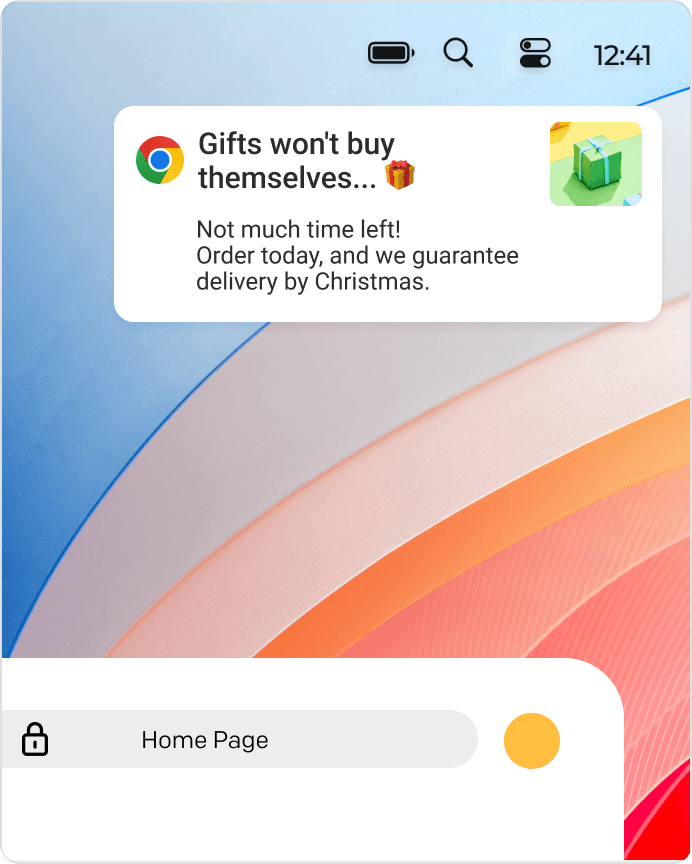
Bring shoppers back for Black Friday, holidays, or payday with a web push sent after they leave the store.
This data helps you choose better timing, offers, and targeting for your campaign.
In Sellfy, what matters most is holding attention on the product and turning it into a purchase, a signup, or a return to cart. DropUI builds campaigns around store data and shopper behavior close to the buying decision.
If you have doubts before connecting Sellfy, start with these questions. They are the fastest way to understand how to begin and what to expect.
The best starting point is usually one scenario aimed at moving visitors faster from product to decision, such as an exit popup on the product page or a first-contact form. That gives you a quick answer about whether visitors need a stronger reason or just a simpler next step.
Ready to launch
Connect Sellfy and start turning product-page visits into purchases, signups, and recovered traffic that would otherwise be lost.
Getting started takes a few minutes
Last content update: May 21, 2026